What is the nicest month to go to Ireland? It's one of the questions we're asked most often. For some, it's about the weather. For others, it's about price. For others still, it's about convenience and avoiding the busiest times. Whatever considerations you have in mind, this page is designed to help you pick the best time of year for you to enjoy all that Ireland has to offer.
What's in this article
Jump to sections:
When do most people visit Ireland?
Contrary to popular belief, July and August are not the most popular months for visiting Ireland. Both for private customised tours and pre-arranged tour packages, May and September are significantly busier than the peak summer months.
Although lots of visitors avoid peak summer in the expectation that June to August will see the biggest crowds, it is actually the shoulder-season months of May and September that are the busiest times for Irish tourist attractions.
Peak vs Off-Peak Seasons
Across both tour types, the strongest booking periods align with Ireland's most favourable weather and cultural calendar:
- 35.6% of tour guests visit Ireland in May or September
- July is the third-quietest month of the season (for shared tours)
- Shared tour packages and bespoke private tours follow a similar pattern
Bespoke private tours
Private tours show strong peaks in May and September, with minimal winter activity. June, July and August are significantly quieter than the shoulder seasons.
Shared tour packages
Pre-arranged package tours follow the same pattern as bespoke private tours, with May and September as the busiest months.
What's behind this pattern?
Shannon O'Brien, our Tour Sales and Operations Manager, has a theory on why the crowd narrative has inverted:
"If you just Google 'when's the best time to come to Ireland', you see a lot of people on Reddit saying July and August are super busy because the kids are off school. So what's potentially happened, at least on the tourism side, is that everyone is reading the same advice and doing the same thing - they're all booking May and September and avoiding July and August. The irony is that May and September are now the busiest months, while July and August are actually quite quiet."
Weather expectations play into it too. The comparison with continental Europe is an easy mix-up to make - as Shannon notes, "Ireland's summer is very different from continental Europe - if you were visiting Italy, yes, July and August would mean peak heat and peak crowds. But Ireland is mild rather than hot." Add that to the school holiday warnings, and the same seasonal bias keeps reinforcing itself year after year.
What about crowds at the attractions?
Shannon points out that My Ireland Tour guests are largely insulated from crowds regardless of timing. All visits are pre-booked with dedicated time slots, so guests can access any sight on the itinerary regardless of the season. "The only thing that might be hindered is maybe a photo opportunity - there might be a few more people there - but otherwise, actually accessing any of the sights we have on the itineraries is safe because they're all pre-booked."
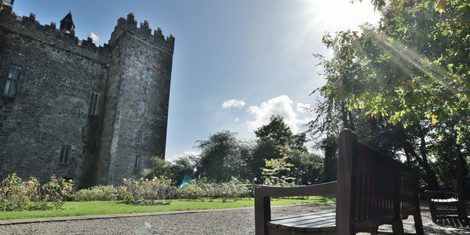
The one exception Shannon flags is Blarney Castle, where pre-booking isn't available. But even there, the queue is specific to kissing the Blarney Stone itself - the stairwell is so narrow that waiting times can hit an hour regardless of season. As Shannon puts it: "it literally doesn't matter what time of year you go - you can get caught with that." If kissing the stone isn't on your list, the castle grounds are beautiful and freely accessible at any time.
How much do Ireland tour packages cost by month?
The tour package itself is one of the two major costs of a trip to Ireland (the other being airfares). While flight prices vary a lot, tour prices are fairly stable across the season. The chart below shows the average price per person per night across our shared group tour packages, by month of departure.
Key takeaways:
- July is cheaper than June and September; August and September are comparable in cost.
- Across the 8-month season, there is a 20.6% spread between the cheapest month (March) and the most expensive (June).
- Across the peak months of May to September, the spread between the cheapest (July) and most expensive (June) is just 3.3%.
- August and September are practically identical in cost.
Package tours pricing by month
July is the cheapest of the warmer months (May-September). But from May onwards, prices are similar enough that the cost of the tour package itself is unlikely to be the deciding factor for most people choosing when to tour Ireland.
What's included in the tour package?
Tour inclusions vary significantly depending on which tour operator you choose. Here at My Ireland Tour, inclusivity and transparency are two of our core tour-design principles. Unbeatable value is, too. So the prices in the graphs above reflect an inclusive package where there is no upselling, no optional extras, and no sales pitches on the bus. Our tour prices include:
- All tour attractions
- Irish Tour Guide / Driver (one person)
- Accommodation
- Evening meals
- Breakfasts
- Some lunches and/or afternoon teas (not all)
- Airport transfers on arrival and departure days
- Luxury, air-conditioned coach or minibus
How do flight prices vary throughout the year?
Beyond the tour package, flights are typically the other major cost of a trip to Ireland. But what is the most expensive time to fly? Precise flight cost data for return flights from North America to Ireland is very hard to come by — airlines are very reluctant to publish this data. However, we have been able to get hold of some global average prices across all routes, not just to Ireland.
Key takeaways:
- Christmas and New Year are the most expensive times to fly.
- July and August are the most expensive months within the Irish touring season.
- However, flights in July and August are only 8% more expensive on average than May, June, and September.
- The cheapest time to fly is in early March, when the airfare cost index is 25% below the in-season peak.
The above graph challenges a common assumption: July and August are not the most expensive months to fly. The true price peaks fall at New Year and Christmas. The summer period — late June through August — is 12-15% less expensive than this festive peak.
The cheapest flying conditions fall in late winter (tours of Ireland typically run from early March until late October). Early March consistently records the lowest average airfares. A secondary dip occurs in mid-May (index 75-76) before prices rise heading into summer.
The above chart plots a relative cost index across every week of 2025, based on OAG Airfare Insights data. The specific metric used is the "lowest average price at departure" - the average floor price of economy airfares available for flights departing that week. When that floor rises, even budget fares are expensive; when it falls, affordable options are genuinely available.
Irish weather and climate
Ireland experiences a temperate oceanic climate characterised by mild temperatures year-round, with July and August as the warmest months and January as the coldest. Of course, Irish weather is famously unpredictable, and we always encourage our guests to pack waterproof clothing and layers (see our Ireland vacation packing guide).
Shannon O'Brien, our Tour Sales and Operations Manager, stresses that this unpredictability is the single most important caveat to keep in mind:
"It's just so unpredictable. Typically if you go between the usual May and September, that's your best bet - but it's a bet. We can't depend on last July to predict this July."
Temperature and precipitation by month
The most settled months of the year are May to September, when temperatures are relatively warm and rainfall is relatively low. Unusually, the driest months of the year in Ireland are April-May. The warmest are July-August.
Wind conditions by month
Wind conditions can significantly affect outdoor touring, particularly along exposed coastal routes like the Wild Atlantic Way. Ireland can be breezy throughout the year, but is most settled during the peak summer months June-August.
Most of Ireland's strong winds and storms fall in the winter months, with June to September seeing almost no gale-force winds at all. For most of the touring season, the wind in Ireland averages around 8-9 knots (though May and October are noticeably breezier).
According to the Beaufort scale, a wind of this speed is classed as a "gentle breeze" where leaves and twigs are in constant motion, and lightweight flags are extended from their flagpoles.
For visitors planning coastal drives, cliff walks, or island excursions (Skellig Michael, Aran Islands), the May-September window offers the most reliable conditions. June and July are best of all. Ferry services to offshore islands often cancel during winter gales, while summer's calmer conditions provide consistent access to these popular attractions.
Daylight hours
Daylight duration significantly impacts the touring experience, affecting both the number of activities possible per day and the psychological appeal of travel. Ireland's northern latitude (53°N) creates dramatic seasonal variation in daylight hours, with summer days stretching well into evening while winter afternoons fade quickly into darkness.
June offers the maximum daylight, with sunset occurring after 22:00 (10pm), providing nearly 17 hours of daylight for sightseeing and outdoor activities. This extended evening light makes summer particularly appealing for photography enthusiasts and those wanting to maximize daily touring. March and October see significantly shorter days, with approximately 11 hours of daylight.
Shannon O'Brien highlights a practical implication that's easy to overlook when comparing tour months on price alone:
"One thing people often overlook when opting for the cheaper October prices is the daylight. In October, it's dark by six or seven o'clock - you finish dinner and it's pitch black outside. In July, you're done eating at half seven or eight and you can still stroll around for a good two hours in the light."
As Shannon sums it up: "especially because it's so unpredictable weather-wise, if you have a bigger stretch of the day you have a bigger chance of getting good moments throughout the day."
Conclusion: When is the best time to visit Ireland?
For some travellers, the choice of when to go on vacation is driven more by necessity than by choice. But those who have the flexibility to choose often face a dilemma between what they perceive to be the more popular (i.e. crowded and expensive) peak summer months and the shoulder season, which they might expect to be less busy albeit less warm.
In reality, the data tells a different story. The shoulder season months of May and September are actually the busiest times for touring Ireland, while July and August are quieter. Flight prices are highest at Christmas and New Year, not in summer. Tour package prices are fairly stable across the season, with July being the cheapest of the warmer months. Weather conditions are most settled from June to August, with the longest daylight hours in June.
- Tour package pricing: July is actually cheaper per night than May, June, and September. The peak-season price spread is just 3.3%.
- Flight costs: While July and August are 8% more expensive than shoulder months, they are 12-15% cheaper than Christmas/New Year peaks.
- Weather: Peak summer (June-August) sees the warmest temperatures (18-19°C / 64-66°F average maximum), lowest wind speeds (8 knots), and virtually zero gale-force wind days.
- Daylight: Early summer offers the longest days (sunset after 22:00 in June), offering plenty of time to explore Ireland's attractions during the day and still enjoy evening activities.
Data sources and methodology
Booking trends
Tour booking data represents actual departures from My Ireland Tour's bespoke private tours and shared group tour packages for the year 2025. Data is presented as a percentage of annual bookings by month to normalize for seasonal tour availability. Winter months (November-February) are excluded from most shared tour itineraries, explaining the zero or near-zero values.
Tour package pricing
Pricing data reflects the average price per person per night across My Ireland Tour's standard shared group tour itineraries operating March-October 2025. Luxury and mini-group tours are priced differently but see a similar pattern. Calculations include accommodation, meals (breakfast, dinner and some lunches), guided touring, attraction admissions, and ground transportation. Figures are based on double occupancy in standard rooms. Single supplements and optional extras are excluded.
Flight pricing
Airfare data is sourced from OAG Airfare Insights, which tracks global economy-class airfare trends. The metric used is "lowest average price at departure" — the average of the lowest available economy fares for flights departing each week in 2025. This represents the floor price a budget-conscious traveler would encounter when booking. Data is global and not specific to Ireland routes; actual prices on Dublin, Shannon, and Cork routes will vary based on origin city, booking timing, and airline.
Climate and weather data
Temperature and precipitation data represents average values for the period 1991-2020, sourced from the World Bank Climate Knowledge Portal. Wind data is from Met Éireann (Irish Meteorological Service) for Valentia Observatory, County Kerry, covering the period 1981-2010. Valentia Observatory, established in 1868, is Ireland's longest-operating weather station and provides representative data for Atlantic-facing conditions. Data is publicly available via eDeposit Ireland.
Daylight hours
Sunrise and sunset times represent average values for Dublin throughout the year, sourced from WorldData.info. Times are approximate and will vary slightly by location within Ireland (western locations see sunset approximately 20-30 minutes later than Dublin).
Limitations
- Tour booking data reflects one operator's experience and may not represent industry-wide patterns.
- Flight pricing is global average data; specific route pricing (e.g., New York-Dublin) may show different seasonal patterns.
- Weather data represents long-term averages; actual conditions in any given month or year will vary.
- Analysis does not account for specific personal preferences (tolerance for cold, budget constraints, school holiday schedules) that may override general recommendations.