Welcome to Bath
Famed for its Roman baths and stunning Georgian architecture, Bath is one of few cities worldwide to be designated as a UNESCO World Heritage Site in its entirety. Surrounded by the rolling green countryside of south-west England, Bath is an idyllic location in itself. But it is the history of the city that makes a visit so worthwhile. After their arrival in England around AD 43, the Romans built sophisticated baths and a temple around the natural hot springs which had already made Bath a famous and revered destination. Arguably, it was not until the Eighteenth Century and the neoclassical architecture of the Georgian era that Bath would truly come into its own and take on the character that continues to attract visitors today.
What's in this guide
Jump to a section:
A walking tour of Bath, England
This walk begins at Bath Abbey and the Roman Baths, crosses Pulteney Bridge to Henrietta Park and Sydney Gardens, then returns via The Royal Crescent and the Jane Austen Centre to finish at the Thermae Bath Spa.
Bath Abbey
Our journey begins in the centre of Bath, with the city's most impressive example of Perpendicular Gothic architecture — Bath Abbey. Founded in the Seventh Century as a Benedictine monastery, the Abbey has been reconstituted and rebuilt several times across the centuries. So, what we visit today is a bit of a patchwork of architectural add-ons. The last major phase of the medieval construction ended around 1535, but we owe a lot to Sir George Gilbert Scott whose restoration work during the Victorian era saved the building from the decay and neglect that had befallen it. Visitor tickets can be purchased on arrival. If you have time, be sure to follow the story of Jesus Christ told across 56 scenes on the Great East Window. Find out about other things to see and do...


Roman Baths
The world-famous Roman Baths are one of the most significant Roman sites in all of England and the United Kingdom. Prior to the Roman invasion, the Celts worshipped at these thermal springs, dedicating them to the goddess Sulis. For 300 years following their arrival, the Romans brought their impressive engineering and architectural skills to bear, producing the structures whose remains still draw visitors today. These structures were lost over the centuries, only to be rediscovered in the 18th and 19th Centuries. Today, the Roman Baths function as a museum offering visitors a glimpse into Roman daily life. You can book tickets in advance here.
Pulteney Bridge
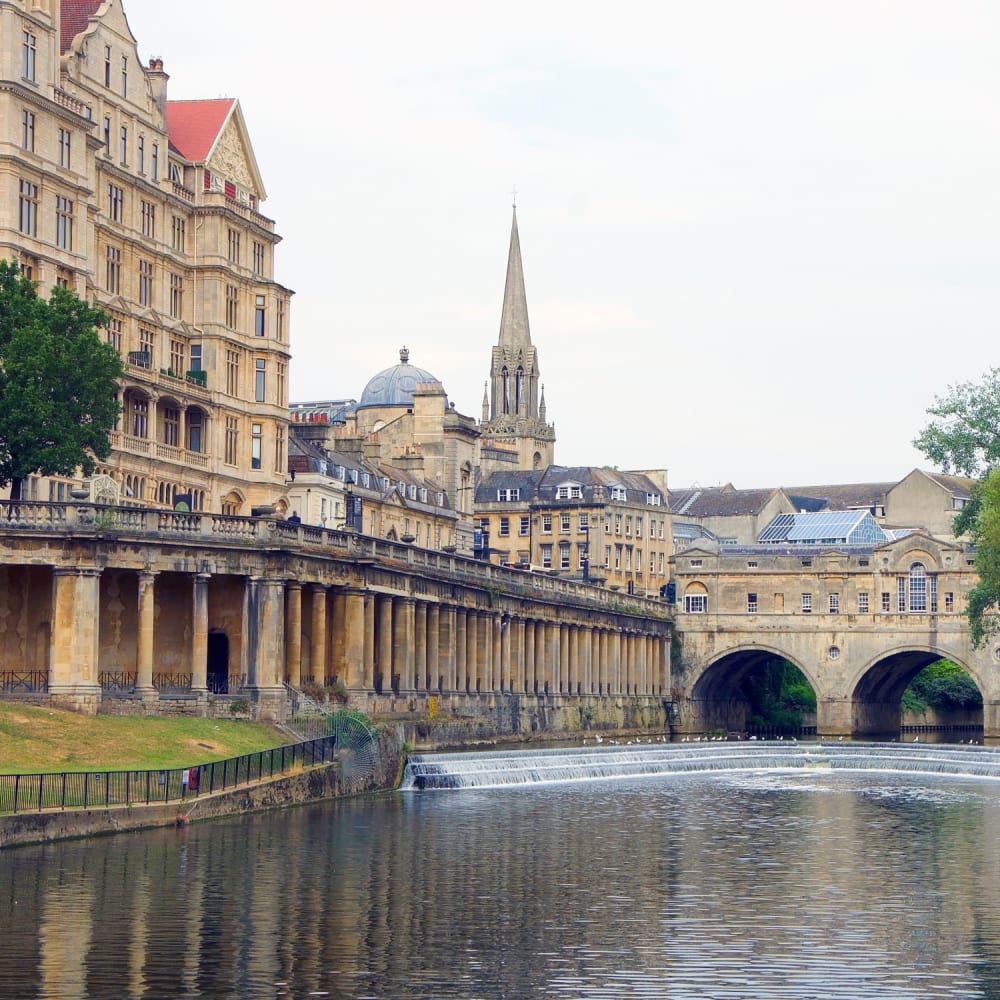
Designed by Robert Adam and completed in 1774, Pulteney Bridge was built to connect the city of Bath with the land on the other side of the River Avon, then owned by the Pulteney family. The bridge is renowned for its unique design, being one of the very few bridges in the world to be lined with shops and restaurants on either side of the thoroughfare. The bridge's architecture celebrates the Classical style, with pediments, pilasters and small leaded domes at either end. If you're ready for quick pit stop, pause for tea and scones in one of the coffee shops on the bridge. Looking for the perfect selfie? The best viewing spots are Pulteney Weir and Parade Gardens.


Henrietta Park & Sydney Gardens
Head along Argyle Street as far as the Laura Place Fountain and admire the Georgian architecture that Bath is famous for as you turn left onto Henrietta Street. Just past the row of buildings on your right, you will find an entrance into Henrietta Park, a calm and open parkland in the English style. Inside, you will find a Garden of Remembrance — the perfect place for some quiet and restful contemplation before our journey continues. Emerge from the park where "Henrietta Gardens" meets "Henrietta Mews". Then follow Suton Street to find Sydney Gardens just beyond The Holburne Museum (a worthy stop-off for the art lovers). Spend some time exploring the Gardens and its famous canal.
Lunch in Bath Centre
Return to Bath centre following Great Pulteney Street, admiring the architecture as you go. Bath is famous for the oolitic limestone masonry that gives its buildings their unique and recognisable character. If you can ignore the modern-day vehicles, you may feel yourself transforming momentarily into a Jane Austen character as you promenade past the impressive stonework. As you cross Pulteney Bridge once again, you will arrive in Bath centre where you will find countless restaurants, pubs and tearooms to suit every taste and appetite.


The Circus and The Royal Crescent
You have seen it in all the period dramas from Persuasion to The Dutchess and, most recently, Bridgerton. The Royal Crescent and its famous row of 30 grade-one listed houses, known as The Circus, make up one of the most iconic and distinctive residential streets in all of the UK. It's hard to imagine a more impressive row of terraced houses. To the filmmakers, it's a godsend. Number 1 Royal Crescent has even been restored inside as a Georgian townhouse museum. Book your visit here.
Jane Austen Centre
A visit to a city like Bath would not be complete without a bit of English literature. A short walk from The Royal Crescent, you will find the Jane Austen Centre where visitors can learn about the author's life in Bath and how the city influenced her writing. Her novels 'Northanger Abbey' and 'Persuasion' are both set in the city. Your guide through the museum will be dressed in Regency costume, and you will have opportunity to write with a quill and taste Regency food. Book tickets here...


Thermae Bath Spa
Bring your swimming costume and finish your day trip in the most relaxing way possible: a two-hour visit to Thermae Bath Spa. Watch the sunset from the rooftop pool, filled with the naturally warm spring waters that first drew the Celts and the Romans to this iconic Westcountry location. With today's 21st-century facilities, these mineral-rich waters are enhanced by air seats and bubbling jets. If time allows, you could even book a massage or a facial. And relax...
Walking tour of Bath City Map
This content has been reviewed and is considered up to date as of January 2026.