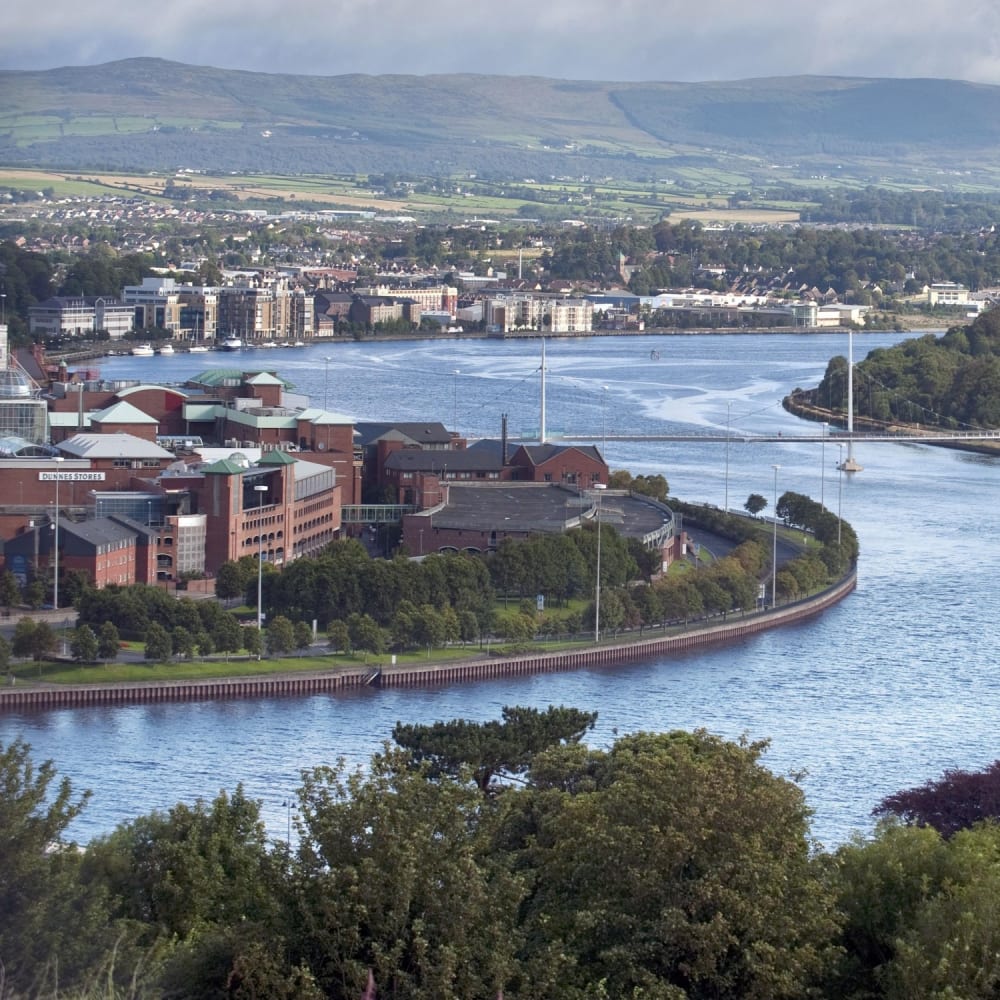
Welcome to Derry/Londonderry
Derry/Londonderry, expanding along the banks of the River Foyle, is a city steeped in rich history and vibrant culture. Known for its iconic walls, dating back to the 17th century, Derry/Londonderry offers visitors a glimpse into its fascinating past while embracing its modern identity. Wander through the charming streets of the Walled City, adorned with colourful murals and historic architecture. Explore the Guildhall, a striking symbol of Derry/Londonderry's civic pride, and immerse yourself in its fascinating museums and galleries. Known for its warm hospitality, lively music scene, and breathtaking scenery, Derry/Londonderry invites visitors to experience the best of Northern Ireland's cultural revolution.
In this article, I'll guide you through the hidden gems and must-see sights of Derry/Londonderry on a walking tour you won't soon forget. One of my favorite things about the city is how effortlessly walkable it is. As someone from Cork, Derry immediately felt like home - both cities share that wonderful, compact character that makes exploring on foot feel like second nature.
What's in this guide
Jump to a section:
A walking tour of Derry/Londonderry, Northern Ireland
This walk begins at the Peace Bridge, loops through the Walled City and its murals, takes in the Museum of Free Derry and lunch at the Craft Village, and finishes at the Guildhall.
The Peace Bridge
We'll start our tour at one of Derry City's most famous landmarks. Spanning across the River Foyle and connecting the east and west banks of the city, The Peace Bridge is a symbol of hope and reconciliation. Opened in 2011, the bridge was designed by renowned architect Wilkinson Eyre. It's sleek design and sweeping curves give the Peace Bridge a modern feel. You'll get the best photos of the bridge by standing on the east bank, and getting the Guildhall and St Eugene's Cathedral in the background. The bridge has designated pedestrian and cycling lanes, and provides stunning views of both the River Foyle and Derry City at every point.


Derry Girls Mural
After crossing The Peace Bridge, heading across the river from east to west, you'll come to the Foyle Embankment. Taking a left here will bring you to a set of traffic lights. Cross the road here onto Water Street, this leads onto Orchard Street. This will bring you past the FoyleSide Shopping Centre on your left-hand side, and then Badgers Bar on your right. The Derry Girls Mural is on the side of Badgers Bar. While it may not be well known outside the British Isles, Derry Girls was a hugely popular sitcom that aired on Channel 4 from 2018 to 2022. It follows the hijinx of a young girl and her group of friends, and one of their hapless cousins; James, set mainly in a Catholic girls' school during the 1990s. The show is a source of immense pride to the Derry locals, and you'll see homages to it throughout the city — the Derry Girls Mural being the most prominent example.
Derry City Walls
Continuing up Orchard Street, take a right onto Ferryquay Street until you reach a plaza known as The Diamond. Heading straight across The Diamond will bring you onto Butcher Street. Towards the end of Butcher Street, take a left onto Magazine Street Upper, which will bring onto Palace Street and the Derry City Walls. The walls are a UNESCO World Heritage Site and were first constructed during the British Plantation of Ulster between 1613 and 1618, as a means of protection from Irish chieftains. The walls run in a circuit around the old city and are an example of the best-preserved fortifications in Europe. It's free to walk one mile long circuit of the walls. They reach 26 feet high and 30 foot wide in places, with photo opportunities of both Derry City and its Bogside region in plentiful supply.


Museum of Free Derry
Circling back from the Derry City Walls, along Magazine Street Upper and onto Fahan Street, will bring you onto Rossville Street. Here, you'll find the Museum of Free Derry. Established in 1997 by the Bloody Sunday Trust, the museum is focused on the civil right movement in Northern Ireland, with a particular focus on Bloody Sunday — the day 13 unarmed civilians were killed by British forces during a civil right march (January 30th, 1972). The museum isn't much to look at from the outside, built within a section of an industrial complex, but inside it's a treasure trove of information. Packed with documents, artefacts and interactive displays, it gives a compelling look back at Derry City during "The Troubles". Particularly poignant is the Memorial Room, which is dedicated to each of the 13 people who lost their lives on Bloody Sunday. There is an entrance fee of £10, and is well worth a visit for anyone looking to get a better understanding of the social and political history of this once trouble city.
For me, this museum is a must-see. When myself and my husband visited in 2025 we had a local guide from the Bogside in Derry, who ended his Bogside walking tour at the Museum of Free Derry. The Bogside is a residential location with living memory among the community of the troubles in Northern Ireland, and a deep understanding and appreciation of how peace was achieved.
You will see a movie at the end of your visit that brings you through the turbulant history and struggle for justice that continues even today.
Lunch at Craft Village
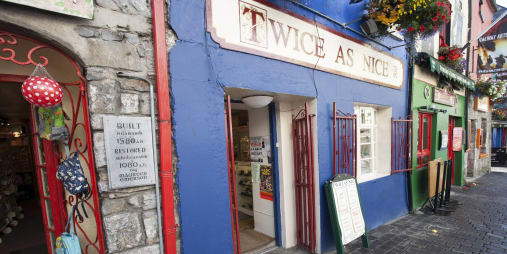
Looping back to Magazine Street, via Rossville Street, William Street and High Street, will bring you to the Craft Village. Located in the centre of Derry, the Craft Village is a wonderfully preserved section of the city that dates back to the 18th century. Made up of historic buildings that run along cobblestoned streets, it acts as both a shopping Mecca and the ideal spot to take a break and grab a snack. You'll find artisan shops selling everything from handmade jewellery, clothes, pottery and artwork. The atmosphere here is Bohemian and friendly, with a continuous variety of events, craft fairs, live music performances and exhibitions taking place throughout the year. Craft Village is also home to a number of cafés, restaurants, and bars where you can relax and take in the atmosphere.


Tower Museum
A one-minute walk up Magazine Street, back towards the river, will bring you to the Tower Museum. While the Museum of Free Derry focuses on the history of the city during The Troubles, the Tower Museum gives an overview of Derry from its prehistoric origins, to the Spanish Armada of 1588, through the Troubles of the last century, to the present day. The museum is located just inside the Derry City Walls, and its roof acts as an open-air viewing area that offerings stunning views across the River Foyle and the city itself. There is an entrance fee of £4, and the knowledgable staff are more than happy to show you around and answer any questions that may arise.
Guildhall
Continuing along the path towards the river for about another minute, you'll reach the Guildhall. This iconic landmark of Derry City stands out with its striking sandstone exterior and distinctive clock tower. The building was completed in 1890 and is neo-Gothic in style. It has acted as a seat of local government since its opening and today is used as a hosts a variety of concerts, exhibitions and events throughout the year. Visitors can explore the Guildhall during designated hours, with knowledgeable guides available to offer insights into its architecture and historical significance. While entry is free, donations towards the buildings' upkeep are welcomed.
If you had already visited the Free Derry Museum, you will have seen the Guildhall featured at the heart of the civil rights movement in Derry, and the site of many important events during The Troubles. The Guildhall is a symbol of Derry's resilience and determination to achieve justice and equality for all its citizens.

Walking tour of Derry/Londonderry City Map
This content has been reviewed and is considered up to date as of January 2026.